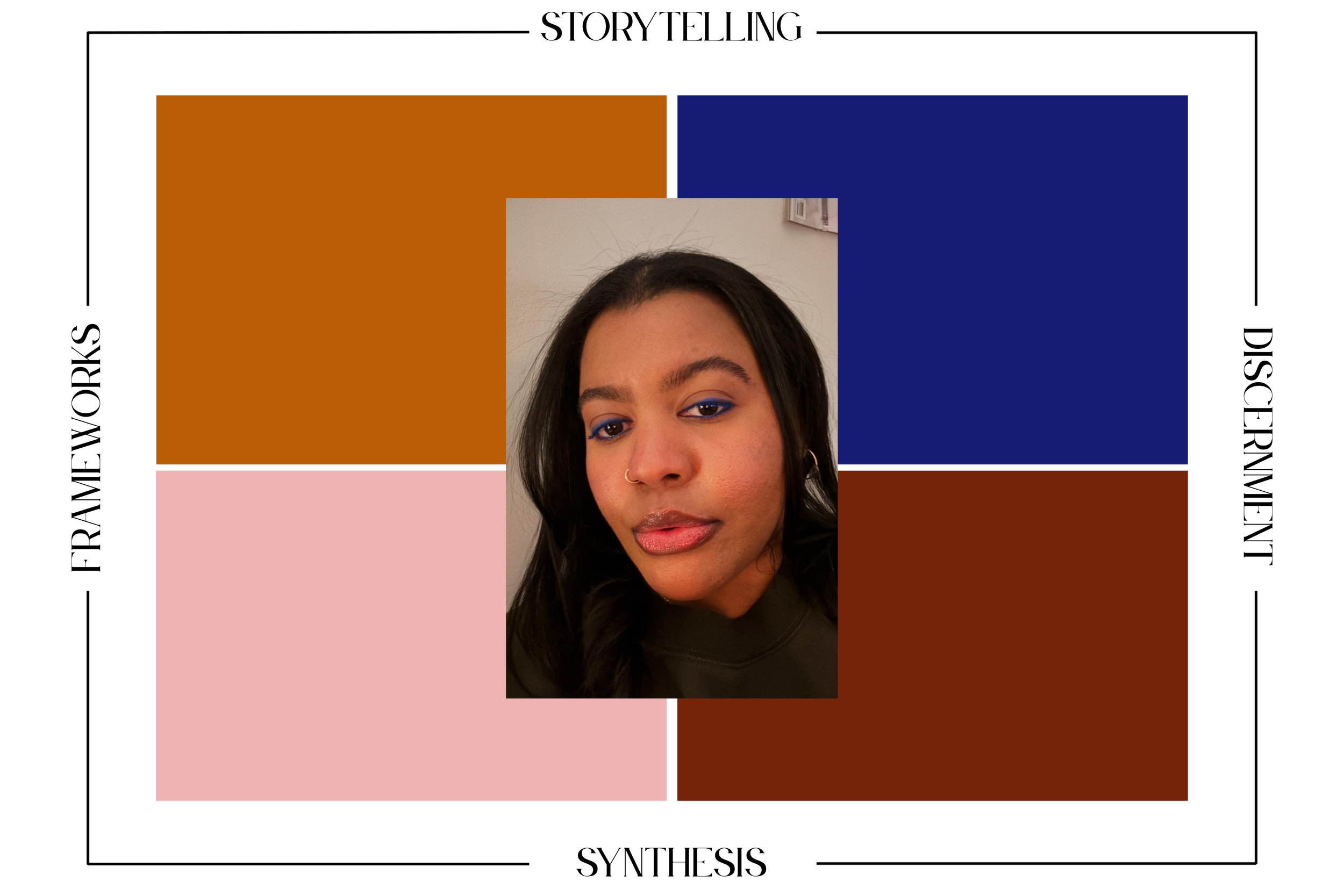
Hi, I’m Julia
I'm an award-winning health journalist whose reporting has shaped policy, been cited in peer-reviewed medical journals, and changed how institutions talk about health equity.
My investigative work has directly prompted infrastructure policy change by halting a highway expansion in Orlando, and my reporting on COVID-19 in Black communities was featured in The Best American Science and Nature Writing 2021. My journalism has been cited in Obstetrics & Gynecology, Health Communication, Annals of Health Law and Life Sciences, and Health Research Policy and Systems, and referenced by the American Medical Association, the American Lung Association, and the Center for American Progress. My work has also been featured in Harvard Library's COVID-19 Health Research Guide.
I co-directed a large-scale storytelling and research initiative at New America examining the role federal COVID funding played in reducing poverty — a project that produced a 51,000-word report, more than 30 articles, national media coverage, and won an Anthem Award in 2025. My bylines include The Washington Post, Vox, New York Magazine, Slate, FiveThirtyEight, NBC News, and Popular Science, where I wrote a monthly neuroscience column.
I spearhead Parker Street, a newsletter about health, wellness, fiction, tech, culture, and history, and whatever else has my attention. In 2025, Parker Street, under the title Healthy Futures, was named a Substack Top 10 Rising Newsletter in Health & Wellness and featured by Good Good Good as one of the 24 Best Wellness Newsletters for a Balanced Inbox. I also founded the Library of Black Wellness, a living archive preserving the stories, practices, and cultural knowledge that have sustained Black wellness across generations.
-
I'm drawn to anything that sounds, looks, or reads like it's rooted in the earth.
But I'm inspired by music more than anything else, and the way songwriters tell stories and build worlds around their art—such as Frank Ocean, Beyoncé, Stevie Nicks, and others. Otherwise, I’m inspired by the smaller moments within everyday life. The way my mother sounds when she sings, which is very much like an angel, as cliché as that sounds. The way my Nana did her makeup when I was a little girl. My uncle was a house DJ, and something about combining words with a beat to tell a story feels true and ancestral to me.
The authors who shape me are Toni Morrison, Toni Cade Bambara, Jesmyn Ward, William Faulkner, and Flannery O'Connor. The Southern Gothic pulls me in. It’s dark, rich, mysterious, a little spooky, deep enough that you want to keep going even when you can feel the weight of it. Their work also reminds me of my home—North Carolina.
-
When I write, I'm thinking about how the piece looks on the page as much as what it says. Where do the photos go? Where do the headers land? How long is each paragraph? Structure changes how someone engages with the material. You don't want it too long, you don't want it too short, you want the length and the visuals to hold the weight of the story you're telling.
I'm a believer in the rule of threes. The third paragraph is where I want to land before a divider, an image, or a break. That's where I hit the reader with the brick. I get to the point, then yank them into the rest of the piece. It's a rhythm that the reader actually feels.
-
I think about the soul of what I'm building. Healthy Futures is indigo because indigo is a color, a plant, and a creation process tied to Black Southern history. The logo type is Gloridot because it looks like signage from a future I want to walk into. The cover image is an astronaut sitting on Saturn reading a book, because Saturn rules my birth chart, and because the Capricorn sea goat—climbing out of the ocean and up the mountain, covered in salt—is the kind of grit and earthiness I want my work to carry.
My palette runs to ochre, indigo, and earthy jewel tones. I want things to look like the planet we inhabit. The opening of the Library of Black Wellness is a clip from The Color Purple—Shug reconciling with her father—because the moment is rooted and healing, and because the church is historically integral to Black well-being; and it’s outside, sitting in the woods down a dirt road past the farm. Earth keeps showing up because it's the through-line.
Everyone's style is different, though, and as long as we can find its soul, we can work with it.